01
Bruises you feel before you see
Press a suspect spot with your thumb — a true hail bruise feels soft and springy, like a bruise on fruit. The mat underneath is fractured even when the surface looks intact.
Not every mark means hail damage, and not every storm means replacement. This visual guide shows the signs that matter, the marks that fool people, and how to tell whether it's time for a claim — before you pick up the phone.
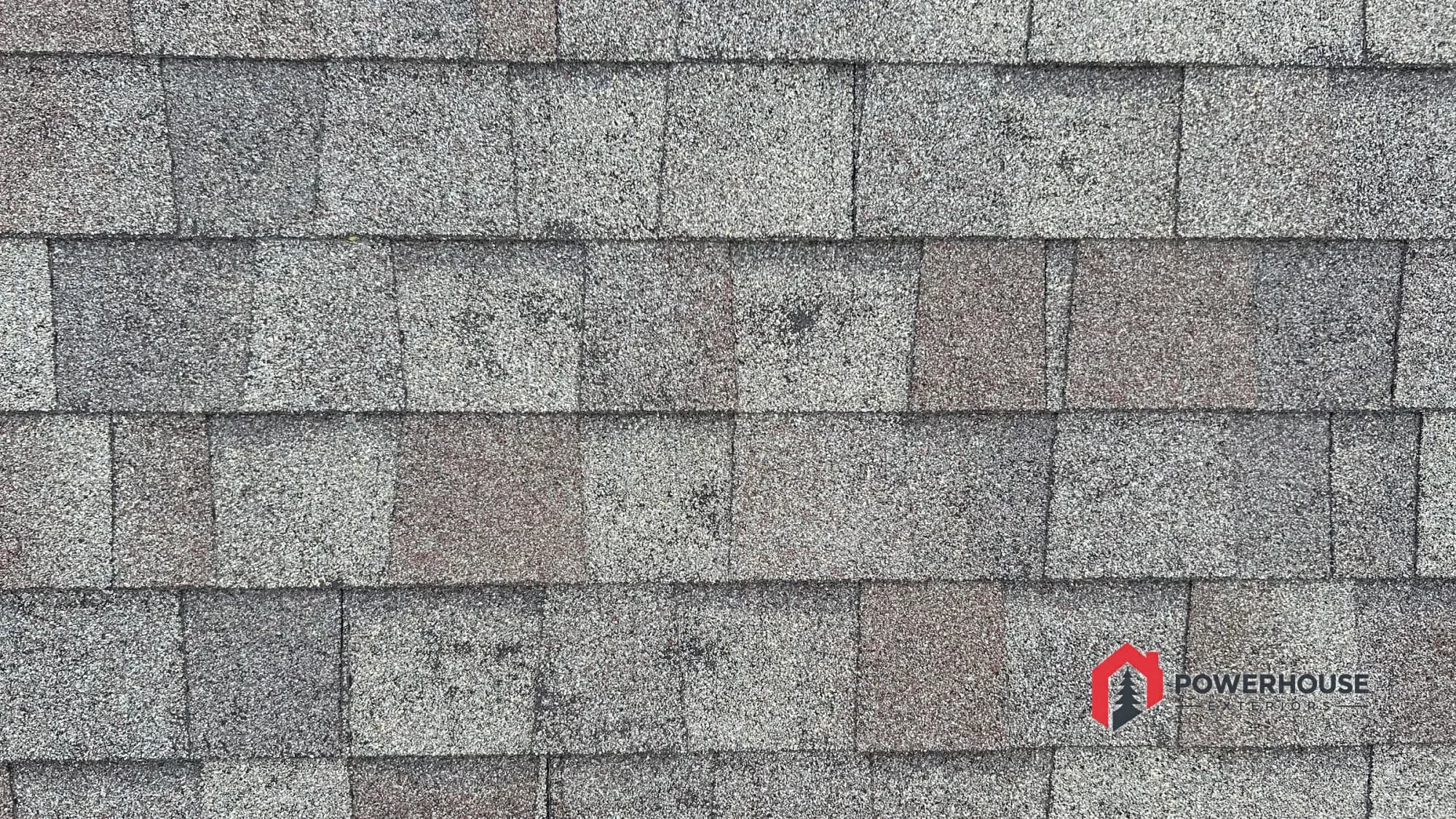
A few random surface marks rarely tell the whole story. Genuine hail damage shows up across multiple test points, on soft metals, and usually on neighboring homes after a known event. It's scattered and irregular — not a tidy, repeating pattern.
That's the single biggest source of confusion: people expect a clean, stamped circle. A real inspection close-up tells a different story — scattered granule loss, not one tidy dent.
Impact marks on soft metals, fresh granule displacement, bruising, and cracks that line up with the timing of a storm are far more meaningful than old scuffs or cosmetic wear.
Press a suspect spot with your thumb — a true hail bruise feels soft and springy, like a bruise on fruit. The mat underneath is fractured even when the surface looks intact.
Impacts knock the protective granules loose, exposing dark asphalt. Look for the shed granules collecting at downspouts and gutter outlets — a fresh, even scatter points to a recent event.
Gutters, downspouts, valley metal, vents, and flashing dent before shingles fail. Soft-metal dimpling is one of the clearest, hardest-to-fake indicators an adjuster looks for.
Larger stones can crack or split a shingle outright, especially on older, brittle roofs. Random splits that don't follow a straight line often trace back to impact.
These are the most common false alarms. Knowing them saves you from a claim you don't need, and helps you describe what you're actually seeing.
Round pops from gas or moisture trapped during manufacturing. They look like impact craters but appear randomly over time — not after a single storm.
Fine, straight cracks from repeated heating and cooling. They follow the shingle's lines rather than the scattered, random pattern hail leaves.
Granule wear in walking paths — around vents, valleys, and access points. Concentrated in lines where people step, not spread across open field.
Uniform aging, dark algae streaks, and factory blemishes are cosmetic or age-related. Consistent, repeating patterns are the tell that it isn't storm damage.
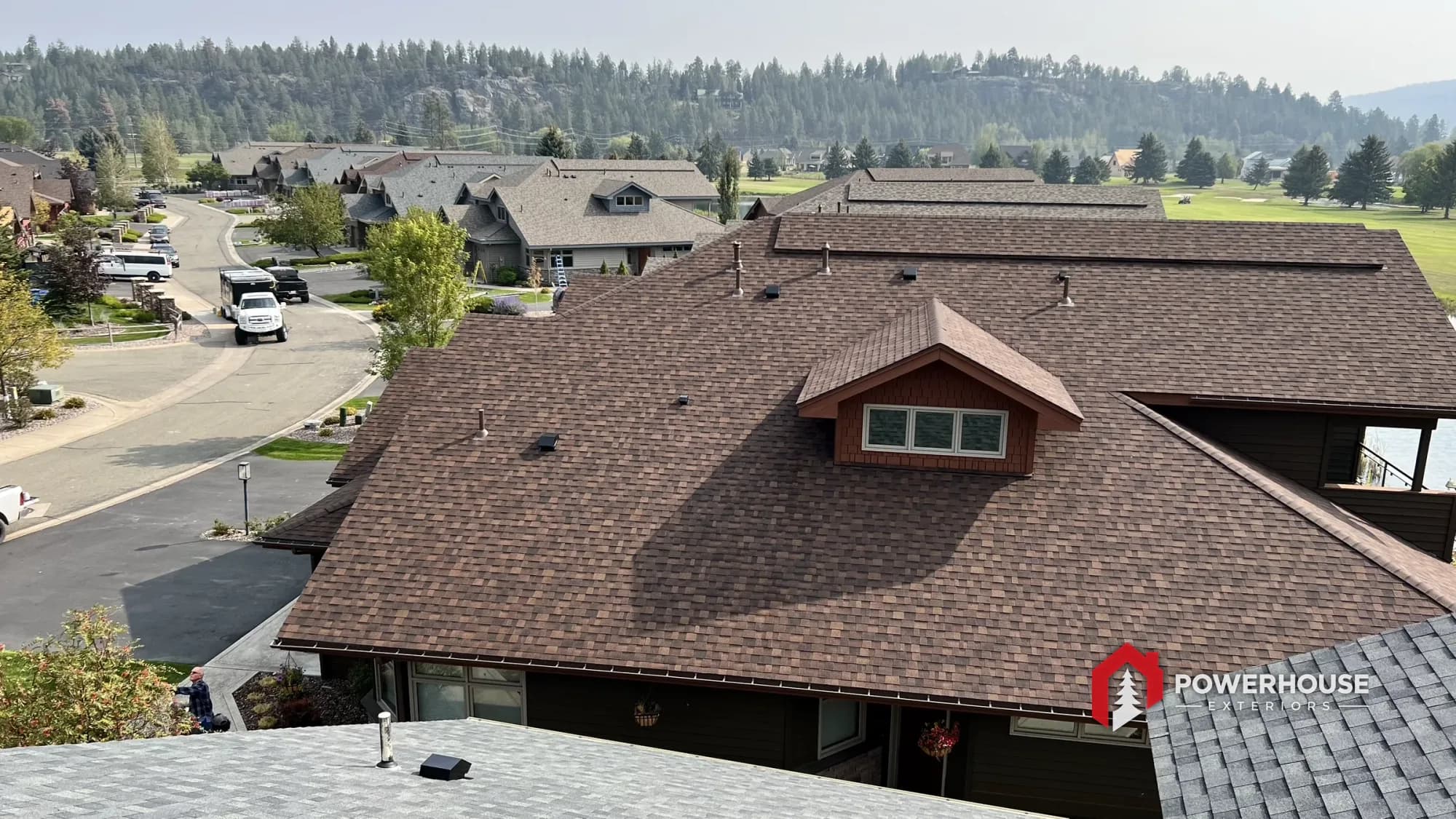
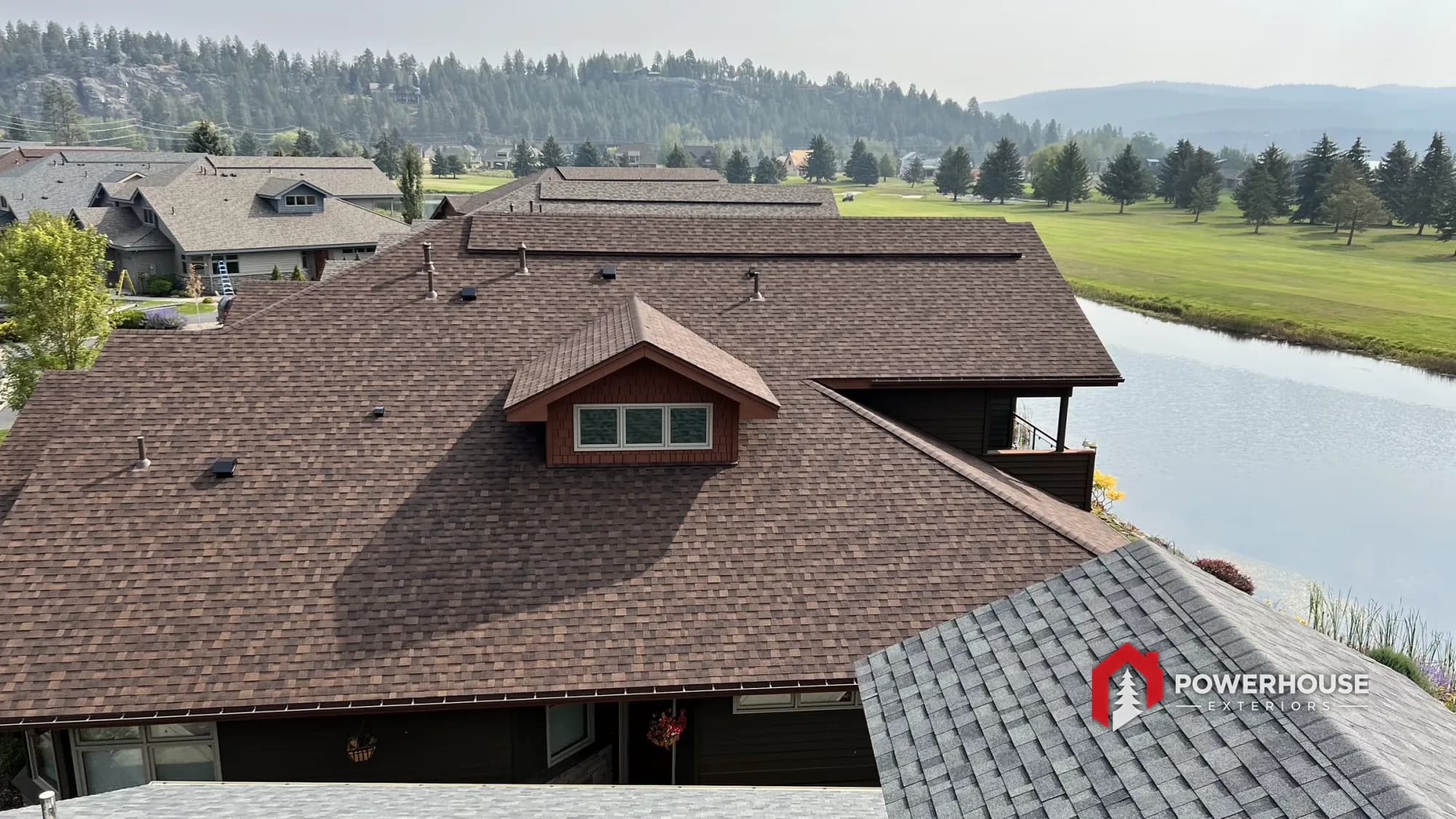
This Lakeview HOA community had roofs at the end of their life after repeated hail. Drag the slider to compare the worn originals with the completed impact-resistant replacement our crews installed.
Every project photo on this page is a real PowerHouse Exteriors job — not stock imagery.
 Before
 After
AfterThe outcome depends on pattern, severity, roof age, and whether the damage reaches the broader roof system. Here's the range we see.
Scattered surface marks with an intact mat. Often no action beyond documentation and monitoring.
Localized impacts on part of the roof. Targeted repair or a slope replacement may be enough.
Widespread bruising, mat fractures, and soft-metal damage across the system. Full replacement — often insurance-eligible.
If hail is a regular visitor, the best repair is a roof built to shrug it off. Class 4 shingles carry the top UL 2218 impact rating, resist future damage, and often qualify for an insurance premium discount in hail-prone areas.
A mark means a lot more when it lines up with a real storm. The Roof Report adds local hail and wind history for your address, plus condition framing, so you walk into any claim or replacement conversation with context — not guesswork.
Not immediately. File once you understand whether meaningful damage actually exists. A claim with no adjuster-verifiable damage can count against you without getting you anything. Start with documentation and a structured inspection, then decide.
Sometimes — dented gutters, downspouts, and dislodged granules at the base of downspouts are visible from the ground and are strong early signs. But bruising and mat fractures usually need a close, on-roof look, which is safer left to a professional.
Yes. The outcome depends on the pattern, severity, roof age, and whether the damage affects the broader roof system. Isolated impacts can be repairable; widespread bruising with soft-metal damage usually points to replacement.
Shingles rated Class 4 under UL 2218 — the top tier — withstand a 2-inch steel ball dropped from about 20 feet without cracking. In hail-prone areas they resist future damage and many insurers offer a premium discount for installing them.
Most policies have a filing window (often one year, but it varies). Damage can also stay hidden for months. If a significant storm hit your area, it's worth getting context and documentation on record sooner rather than later.
Learning is useful. A roof score is more useful when you want to turn that context into an actual next step.
See pricing guidance