Spring
Mar–May
Peak storm season across Ada and Canyon County — the most likely time for fresh, claimable damage.
Check for storm damage after each event.
Our high-desert weather is hard on roofs in ways a national brochure never mentions. Here's what our sun, storms, and swings actually do to a roof here — and what it means for the choices that make yours last.
200+
sunny days a year of UV
30–40°
day-to-night temperature swings
Spring–Summer
hail & wind storm season
Freeze–thaw
winters that test flashing
A roof here isn't stressed by one thing — it's a year-round cycle. Every season hands off to the next, and the wear compounds.
Spring
Mar–May
Peak storm season across Ada and Canyon County — the most likely time for fresh, claimable damage.
Check for storm damage after each event.
Summer
Jun–Aug
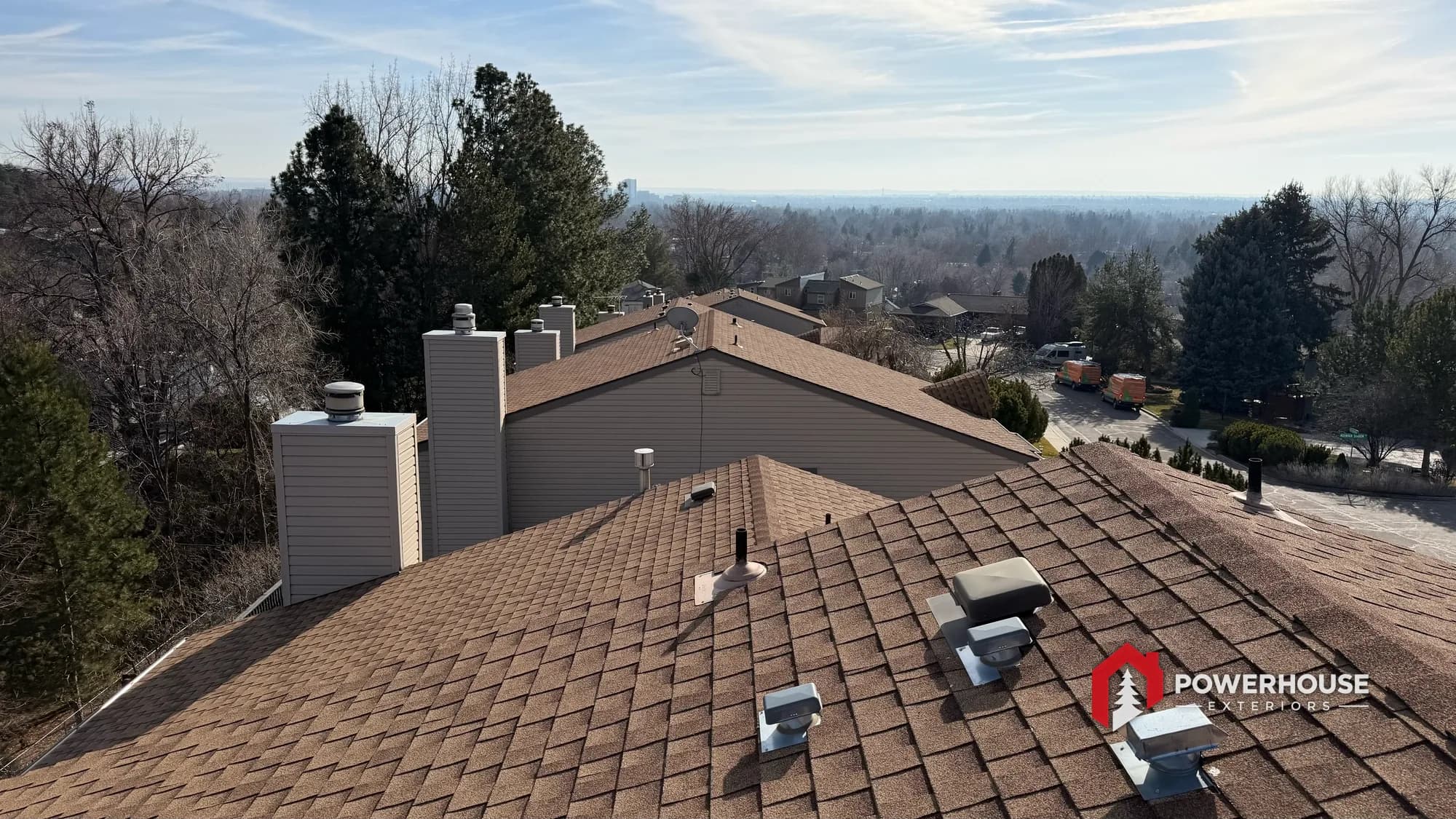
Long, high-elevation sun bakes shingles and drives attic temperatures up, punishing under-ventilated roofs.
Make sure ventilation is doing its job.
Fall
Sep–Nov
Wide day-to-night swings expand and contract the roof daily, loosening fasteners and stressing aging shingles.
Clear valleys and gutters before winter.
Winter
Dec–Feb
Snowmelt that refreezes at the eaves backs water under shingles and flashing — small gaps become interior leaks.
Watch for ice dams and interior stains.
Every Treasure Valley roof runs this cycle, year after year — the wear adds up.
Six forces do the damage here. Individually they're manageable — together, and year after year, they're why Treasure Valley roofs age faster than the label promises.
Intense UV at elevation bakes the asphalt, fades color, and dries out shingles faster than the label years ever assume.
Thirty-to-forty-degree day-to-night swings and hot-to-freezing seasons expand and contract the roof daily, working nails loose and cracking aging shingles.
Spring and summer storms bruise shingles, scatter granules, and lift edges — sometimes turning a sound roof into an insurance claim overnight.
Refreezing snowmelt forces water under shingles and into flashing, quietly turning small gaps into interior leaks by spring.
Arid air pulls the oils out of asphalt, leaving shingles brittle and quicker to crack under everything else the climate throws at them.
High winds carry fine valley dust that scours the granule surface over time, thinning the very layer that protects the roof.
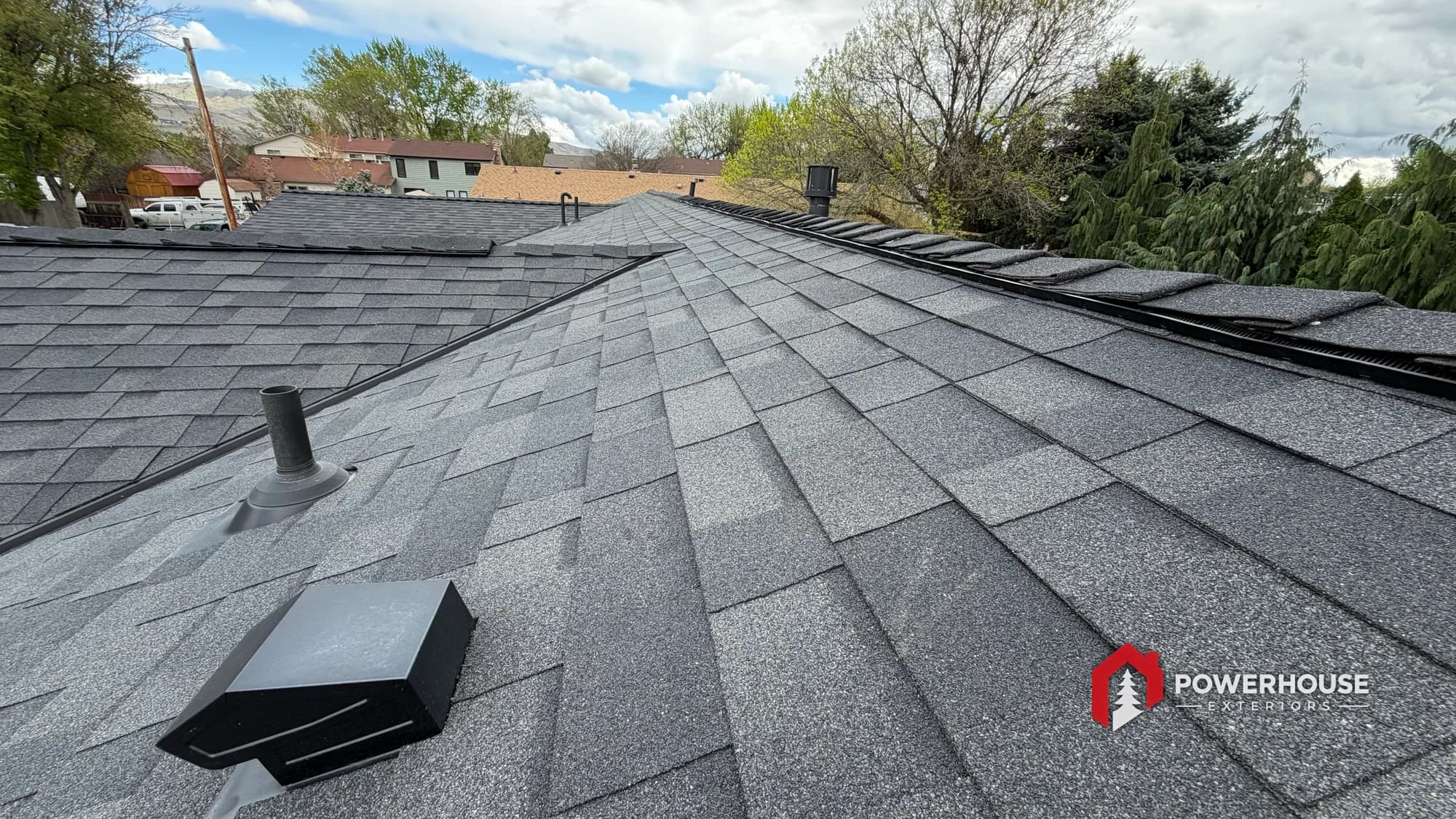
In this heat, balanced intake-and-exhaust ventilation is what keeps shingles from cooking from below — and keeps your manufacturer's warranty intact.
Class 4 shingles shrug off the hail that ends ordinary roofs early, and in a hail-prone valley many insurers offer a premium discount for installing them.
Freeze-thaw and UV find every shortcut. Proper starter, underlayment, flashing, and nailing are the difference between a roof that lasts its full life and one that fails early.
The elements hit every roof a little differently. A free Roof Report pairs your roof's condition with local storm and hail history for your exact address — so you see how the Treasure Valley has actually aged your roof, and what to do next. One address, about a minute, no phone number.
PowerHouse Exteriors is a Treasure Valley roofing company serving homeowners across the region — Boise, Meridian, Nampa, Eagle, Caldwell, Kuna, and Star.
Often a few years less than the same shingle would in a mild climate. Intense UV, big temperature swings, storms, and freeze-thaw all age roofs faster here — so a shingle rated for 20–25 years may hit the repair-or-replace decision toward the lower end of that range. Ventilation, install quality, and storm luck decide where yours actually lands.
For most Treasure Valley homes, a quality architectural asphalt shingle — ideally impact-resistant (Class 4) given our hail — balances cost, looks, and durability. Standing-seam metal lasts longer for those who want it. Whatever the material, ventilation and proper installation matter just as much as the product for how the roof holds up here.
Yes. Spring and summer bring hail and wind across Ada and Canyon County most years, and even modest hail knocks granules loose and shortens roof life. Damage often hides in plain sight — a roof that looks fine from the yard can still hold a valid insurance claim up close.
Late spring through fall — our long dry stretch — is ideal for installation, and getting ahead of the next storm season beats scrambling after damage. Roofs can be replaced in winter when needed, but freeze-thaw and snow make the dry months the easier, cleaner window.
Our summer heat drives attic temperatures way up. Without balanced intake and exhaust, that trapped heat cooks the shingles from underneath, shortens their life, and can void the manufacturer's warranty. In the Treasure Valley, ventilation is one of the highest-leverage things you can get right.
Our climate ages every roof — a Roof Report shows exactly where yours stands, with local storm history and a clear next step.
See pricing guidance